Blogs (296)
- Accounting Software (2)
- AdSense (1)
- AI (13)
- AI Prompts (1)
- AI SEO (22)
- AI Tools (4)
- ASP.Net Projects (6)
- Backlinks (1)
- Banking Scripts (2)
- Buy Sell .Net Projects (2)
- Buy Sell Code (29)
- Buy Sell PHP Scripts (4)
- Chat GPT (4)
- Classified Scripts (1)
- Clone Scripts (2)
- Codecanyon Alternative (6)
- Coderobotics (0)
- Content Strategy (3)
- CRM Scripts (1)
- Crypto Platform (6)
- Digital Marketing (4)
- eBooks (1)
- Ecommerce Scripts (1)
- ERP Source Code (1)
- Final Year Projects (3)
- Forex Trading Platform (8)
- Free PHP Projects (6)
- GEO (3)
- Google Updates (4)
- Hosting (1)
- Keyword Strategy (4)
- LLM SEO (5)
- Marketplace Scripts (2)
- Micro SaaS (6)
- MLM Scripts (1)
- Online Booking Script (1)
- Passive Income (11)
- PHP Development (1)
- PHP Scripts (38)
- PHP Tutorial (6)
- PhpGuard (3)
- PPC (1)
- Python Scripts (1)
- Readymade Software (3)
- Reselling Software (2)
- SaaS Scripts (3)
- School Scripts (1)
- SEO (30)
- Side Hustle (1)
- Social Media (2)
- Technical SEO (0)
- Vibe Coding (3)
- Website (10)
- White Label SEO (0)
- White Label Software (19)
AI is Not King: The New Approach to Marketing
AI, AI SEO
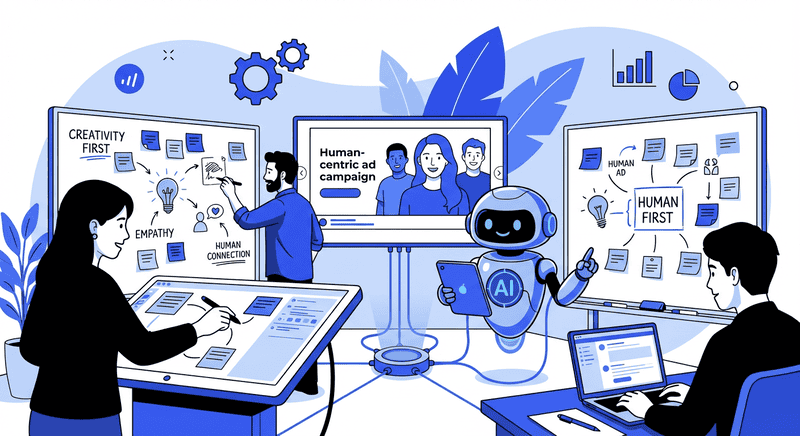
Artificial intelligence is no longer the silver bullet many marketers hoped for. While AI tools can boost productivity and reduce costs, audiences, consumers, and even major platforms are pushing back against generic, AI-only content. Data shows that AI-generated content often fails to engage, build trust, or convert at the same level as human-led work. The new frontier is not “AI replaces humans,” but rather a strategy-first, human-augmented system where AI enhances workflow without diluting authenticity and brand voice.
Why AI-Generated Content Is Burning Out Audiences and Underperforming
Generative AI tools exploded onto the marketing scene with promises of effortless content at scale, but reality has proven messier.
Audience Fatigue and Distrust
- 59.9% of consumers now doubt online authenticity because of AI content proliferation. Only 33% feel AI makes emotionally resonant content.
- A survey found that 75% of Americans trust the internet less than ever, largely due to AI-generated or misleading content.
- More than 20% of recommended videos on YouTube are labeled “AI slop”—meaning low-quality, filler content that audiences quickly tune out.
Performance Problems
Even when AI content is optimized for SEO, click-throughs and engagement can crater. In cases where search engines display AI summaries directly in search results, traditional publishers have seen up to an 80% drop in clicks.
These trends show that quantity without quality leads to diminishing returns—and danger for brand credibility.
What’s Replacing “Prompt Libraries” and Generic Automation
Prompt libraries and cookie-cutter AI automation once dominated workflows, but marketers are shifting toward systems that blend strategy, human insight, and selective AI enhancement.
Key Shift Areas
- Human-first storytelling
- Strategic planning before automation
- Audience-centric measurement
- Hybrid workflows where humans edit, guide, and shape AI output
Reddit practitioners confirm this is where performance is heading: content that only uses pure AI tends to plateau, while hybrid content with human curation drives higher traffic and conversions.
AI vs Human-Led Content: Key Differences
| Aspect | Pure AI Content | Human-Led / Hybrid Content |
|---|---|---|
| Speed of creation | Fast | Slower |
| Organic traffic | Plateau or decline | Sustained growth |
| Depth & expertise | Generic | Insightful |
| Conversion rates | ~0.8% | ~3.2% |
| Emotional impact | Low | High |
| Audience trust | Lower | Higher |
| Strategic value | Weak | Strong |
The data makes something clear: AI is a productivity tool—not a replacement for strategic, human creativity.
A Strategy-First, Human-Led System That Actually Converts
1. Start With Your Audience Pain Points
AI can help research common questions and topics—but humans must interpret what truly resonates.
2. Define Clear Business Goals
Before generating content, decide what success looks like:
- Traffic growth
- Lead generation
- Brand awareness
Goals determine tone, format, and distribution.
3. Use AI for Support, Not Substitution
Examples of effective AI use:
- Topic keyword research
- Initial draft outlines
- Metadata tags and schema markup
- Content decay monitoring and updates
But humans still write the narrative, deliver insights, and tell stories.
4. Measure Beyond Views
Track:
- Engagement depth
- Retention
- Conversion
- Shares / mentions
Avoid vanity metrics that look good but don’t connect back to business outcomes.
Real-World Workflows to Scale Content Without Losing Quality
Here’s an efficient hybrid workflow used by modern content teams:
- AI Tools Generate Research Data
- Human Experts Craft Strategy & Messaging
- AI Produces Draft Outline
- Human Writers Create Rich Content
- AI Assists With SEO Optimization
- Human Final Edit & Publication
- Analytics Inform Iteration and Updates
This approach gets the efficiency benefits of AI without sacrificing voice, authenticity, and conversion power.
Walk Through Real AI Marketing Fails and How to Avoid Them
Fail: “AI-Generated Promo That Misled Customers”
An event’s AI-created images promised magical experiences—people showed up to find a disappointing reality and backlash ensued.
Fix: Always validate visual content with real product imagery and ground truth.
Fail: Automated Posting that Missed Context
AI automation scheduled posts without understanding cultural moments, losing relevance.
Fix: Humans must supervise scheduling and contextual relevance.
Fail: Pure AI Content Plateauing in SEO
Marketing teams saw AI content gain initial traffic then flatten, while human and hybrid pieces kept growing.
Fix: Ensure human editing and strategic framing.
FAQs — Your Questions, Answered
Q: Is all AI marketing content bad?
A: No. AI can be a powerful tool, but it shouldn’t be the entire strategy. Hybrid approaches consistently outperform pure AI content.
Q: Will search engines penalize AI content?
A: No formal penalty yet, but search algorithms reward quality and depth—which pure AI often lacks. That risks lower long-term rankings.
Q: What types of content should remain human?
A: Thought leadership, brand storytelling, strategic messaging, and anything meant to convert.
Q: Can AI help personalize content at scale?
A: Yes—AI excels at personalization and data analysis, but the message still needs human refinement.
Final Thoughts
AI is transformative—but it isn’t the “king” of marketing. As datasets show, audiences are increasingly skeptical of generic AI output. The future of effective marketing lies in human-centered strategy; authenticity; deep audience insight; and thoughtful use of technology. Marketers who master this hybrid model will outperform competitors stuck in the trap of automation for automation’s sake.
This article was posted by Sasi and tagged in AI Is Not King: A Strategy-First Approach to Modern Marketing
Don’t Keep This to Yourself — Share It!


Leave a Comment
Comments
No comments yet. Be the first to comment!